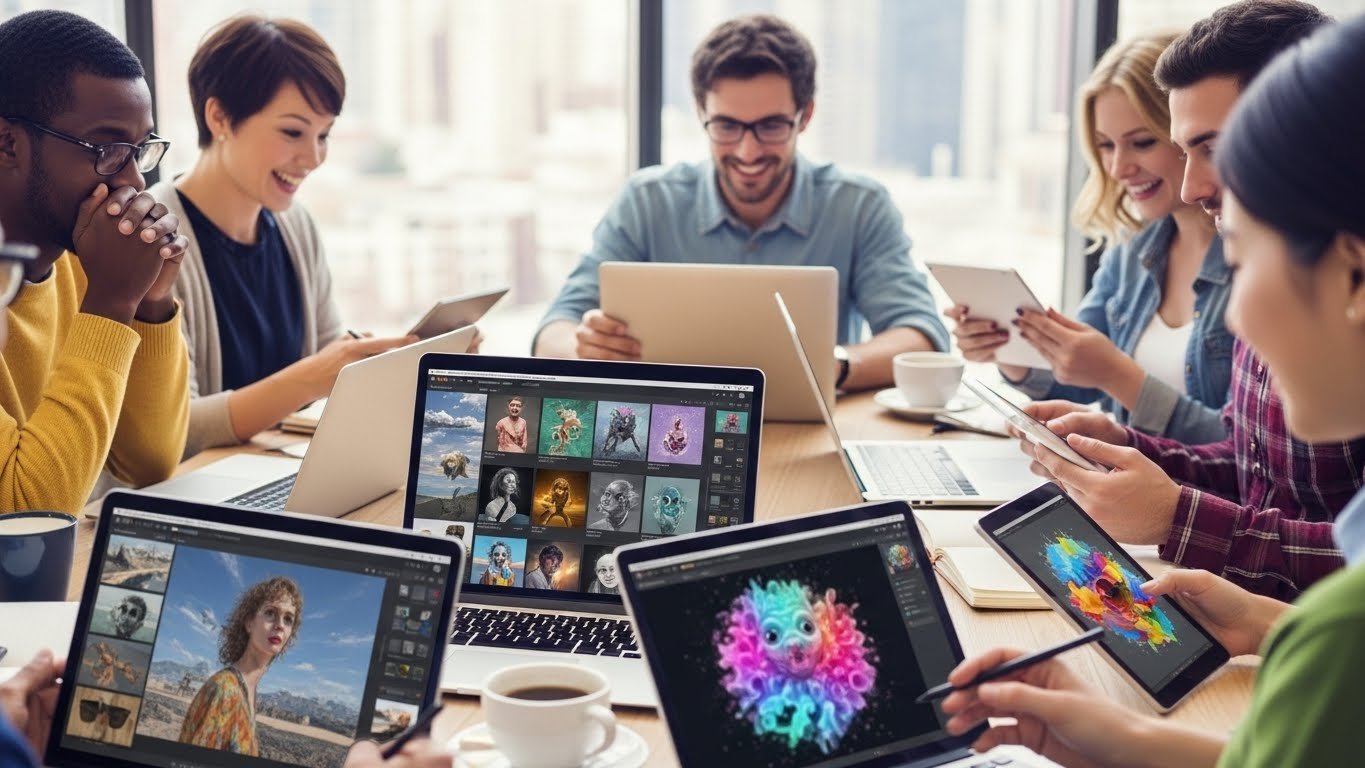
Over the past few years, I’ve watched, and more importantly, actively participated in, a quiet revolution in how we create visual content. What once felt like science fiction, describing an image and having it instantly appear, is now a daily reality for countless individuals, myself included. We’re talking about AI image generator tools, and if you haven’t dabbled with them yet, you’re missing out on a truly fascinating evolution in digital creativity.
From my own design work, where I constantly seek fresh ideas, to observing the broader landscape of content creation, these tools have moved beyond mere novelty. They’ve become legitimate instruments in the creative arsenal, fundamentally altering workflows and sparking new forms of artistic expression. But what exactly are they, and how do they conjure such seemingly magical visuals from simple text prompts?
Demystifying the Magic: How AI Image Generators Work
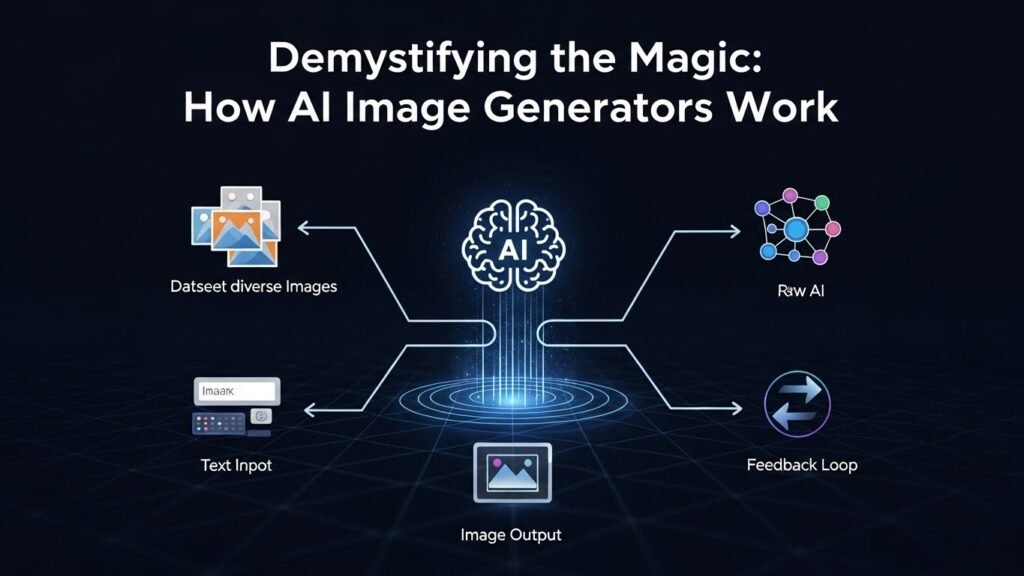
At its heart, an AI image generator is a sophisticated computer program trained on an enormous dataset of images and their corresponding text descriptions. Think millions, even billions, of pairings. When you type in a phrase – say, “a futuristic cityscape at sunset, neon lights, cyberpunk aesthetic” – the AI doesn’t just pull up a pre-existing image. Instead, it processes your prompt, drawing upon its vast training to understand the concepts, styles, and elements you’ve requested.
The most common underlying technology for these tools today involves what are called “diffusion models.” Without getting too bogged down in technical jargon, imagine a process where an AI starts with a canvas of pure static noise, then iteratively refines it, gradually “denoising” it until it reveals an image that matches your description.
It’s like sculpting from a block of marble, but the sculptor is an algorithm, and the marble is pure visual information. Tools like Midjourney, DALL-E, and Stability AI’s Stable Diffusion are prime examples of this technology in action, each with its own artistic flair and approach to interpretation.
Beyond Text-to-Image: The Expanding Toolkit
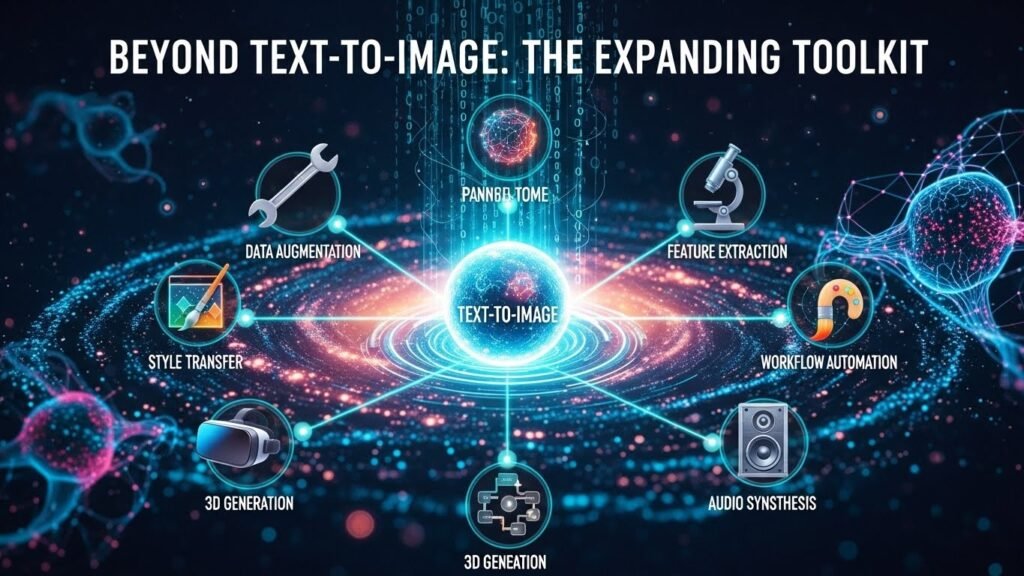
While “text-to-image” generation is the star of the show, these platforms offer much more. I’ve spent countless hours experimenting with features that extend creativity in unexpected ways:
- Image-to-Image Transformation: You can feed an existing image into the AI and ask it to transform its style or content based on a new prompt. Want your photo to look like a Van Gogh painting? It’s possible.
- Inpainting and Outpainting: Need to remove an unwanted object from a photo or extend the background of an image beyond its original borders? These tools can intelligently fill in or generate new visual information that blends seamlessly.
- Variations and Upscaling: Often, an initial generation isn’t perfect. You can ask the AI to generate multiple variations of a chosen image or upscale a lower-resolution output to a higher quality without losing detail.
These capabilities mean that the scope isn’t just about creating from scratch; it’s also about enhancing, modifying, and iterating on existing visuals in powerful new ways.
Practical Applications Across Industries
The practical uses of AI image generation are incredibly diverse. I’ve seen graphic designers use them to quickly prototype concepts for branding projects, iterating through dozens of logo ideas or mood board visuals in minutes rather than hours. Marketers are generating unique, eye-catching social media graphics and ad creatives that stand out in crowded feeds.
For independent creators – bloggers, YouTubers, self-published authors, these tools are a godsend for producing high-quality, custom visual content without the need for expensive stock photos or commissioning original artwork for every piece. Even in fields like architecture and interior design, AI can visualize complex concepts or explore design variations at an unprecedented pace. The speed and accessibility they offer are truly game-changing for visual content creation.
The Nuances: Prompt Engineering and Ethical Considerations
However, it’s not all smooth sailing. Getting truly great results from an AI image generator requires skill, a process often dubbed “prompt engineering.” It’s an art form in itself, learning how to craft precise, evocative prompts that guide the AI toward your vision. A well-written prompt is the difference between a generic output and a stunning, unique piece of art. It’s about understanding the nuances of how the AI interprets language and visual elements.
Then there are the crucial ethical conversations. The use of vast image datasets for training raises questions about intellectual property and fair compensation for original artists. There’s also the concern about potential misuse, like generating deepfakes or spreading misinformation, which is a serious ethical challenge.
And, naturally, the fear among some artists that these tools might displace human creativity. My perspective? These are tools, not replacements. They augment human ingenuity, freeing up time for more complex, conceptual work, and opening new avenues for artistic exploration. The human touch the unique perspective, the narrative, the intention remains irreplaceable.
Looking Ahead
As these AI image generation tools continue to evolve, they will only become more sophisticated, offering finer control and even more realistic outputs. We’re on the cusp of an era where virtually anyone can be a visual creator, bringing their wildest imaginations to life. My advice? Dive in, experiment, and embrace this incredible technology. It’s a journey into the future of creativity, and it’s exhilarating.
FAQs About AI Image Generator Tools
Q1: Are AI-generated images truly original?
A1: While trained on existing data, AI image generators combine and interpret elements in novel ways, often creating unique compositions that didn’t exist before. The output is a new creation based on its learned understanding.
Q2: Do I need special skills to use these tools?
A2: No advanced technical skills are required. Most tools have intuitive interfaces. However, learning “prompt engineering,” the art of writing effective descriptions, significantly improves results.
Q3: Can I use AI-generated images commercially?
A3: This depends on the specific terms of service for each AI image generator. Many offer commercial licenses, but it’s crucial to review their policies regarding usage, attribution, and copyright for your intended purpose.
Q4: Do AI image generators replace human artists?
A4: Not in my experience. They serve as powerful tools that augment human creativity, helping artists with concept generation, iteration, and efficiency. The human artist still provides the vision, direction, and narrative, making the final creative decisions.

Related Posts