The coffee machine buzzes at 7:30 AM, and I find myself already knee-deep in emails that accumulated overnight. Three years ago, this scene would have triggered a mild panic attack. Today, I open my laptop, glance at the AI-generated summaries of my inbox, and prioritize my responses in under ten minutes.
What used to take ninety minutes now takes a fraction of the time, and I’m not alone in experiencing this shift. Across industries, professionals are discovering that AI tools have evolved from futuristic novelties into practical workplace companions that genuinely move the needle on productivity.
My journey with AI tools began somewhat reluctantly. I dismissed early offerings as gimmicks overhyped technology that couldn’t understand the nuances of my work. That perspective changed dramatically when a colleague showed me how she used an AI writing assistant to draft first versions of client proposals.
The tool didn’t replace her expertise; it eliminated the blank-page paralysis that had been slowing her down for years. Since then, I’ve tested dozens of tools across various categories, and I’ve developed a clear sense of which ones deliver real value versus which ones are simply dressed-up algorithms chasing venture capital funding.
The Categories That Actually Matter
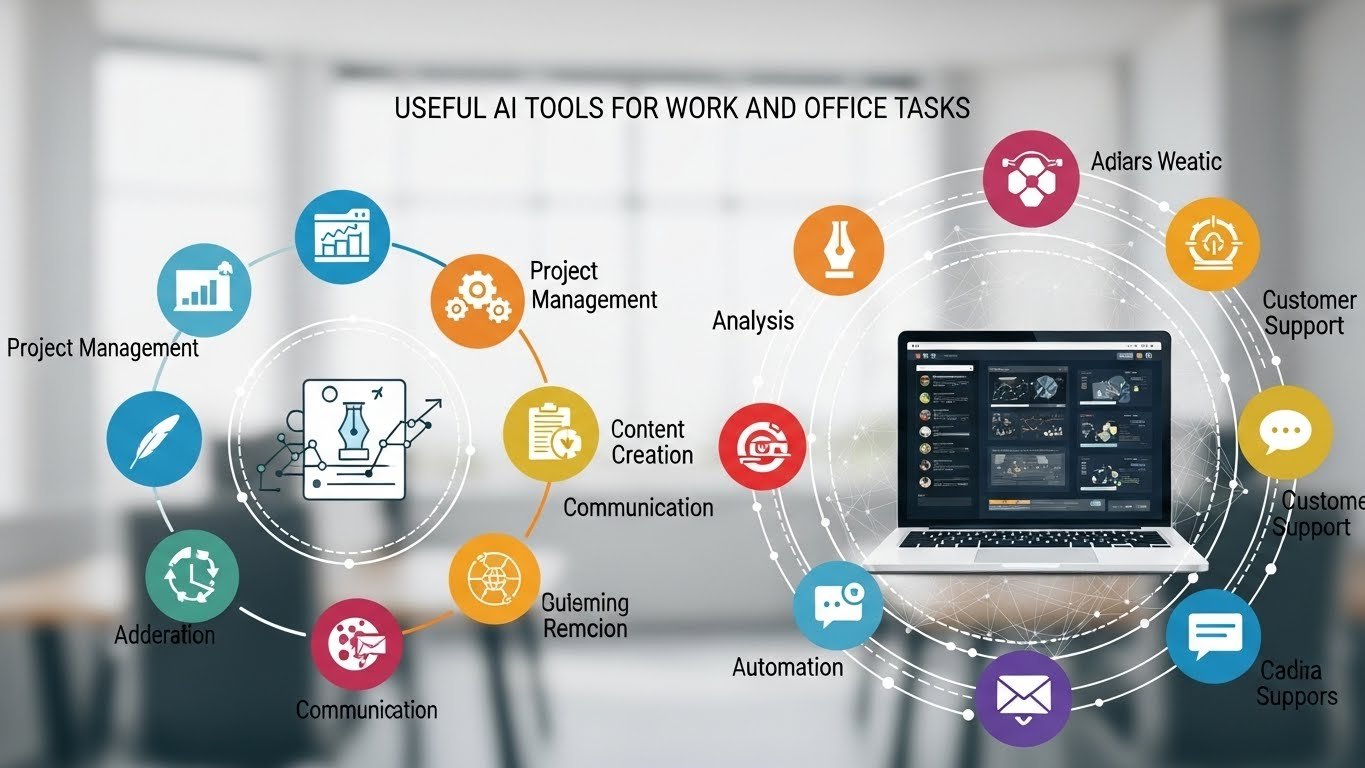
When evaluating AI tools for professional use, it helps to organize them by the problems they solve rather than by their underlying technology. The most impactful tools fall into four distinct categories that align with universal workplace challenges.
Communication and writing tools represent the most widely adopted category, and for good reason. Whether you’re crafting emails, reports, or presentations, the ability to generate clear, polished text quickly has immediate value. Tools in this space can help you rephrase awkward sentences, adjust tone for different audiences, and catch grammatical errors before they reach their destination.
The key insight here is that these tools work best as collaborators rather than replacements. You provide the substance and strategic intent; the AI handles the mechanical lifting of language refinement. A marketing manager I know uses these tools to maintain a consistent brand voice across dozens of quarterly reports, a task that used to require multiple revision cycles.
Research and data synthesis tools have become indispensable for anyone who needs to process large volumes of information quickly. Imagine having an assistant who can read through hundreds of pages of documentation and extract the key points relevant to your current project.
That’s essentially what modern AI research tools offer. They can summarize lengthy reports, compare different sources side by side, and identify patterns that might take humans hours to discover. Consultants and analysts have been early adopters here, using these tools to accelerate the research phase of their projects without sacrificing depth or accuracy.
Meeting and note-taking tools address a persistent pain point in modern work culture. If you’ve ever left a meeting wondering what decisions were actually made or what action items landed on your plate, you’re not alone
. AI-powered transcription and summary tools can capture the essence of conversations, highlighting key discussion points and automatically assigning follow-up tasks to the appropriate team members. This technology proves particularly valuable for distributed teams working across different time zones, where not everyone can attend every meeting live.
Project management and workflow automation tools represent the fourth category, and perhaps the most transformative for organizational efficiency. These tools can automatically route requests, trigger notifications, and even predict potential bottlenecks before they become problems.
A project manager I interviewed recently told me that her team reduced meeting time by thirty percent after implementing AI-assisted workflow tools that handled status updates and resource allocation automatically.
Navigating the Practical Realities

Before you dive headfirst into adopting every AI tool on the market, it’s worth understanding some of the practical limitations and considerations that the hype often overlooks. The technology has genuine constraints that affect how you should implement it in your work.
Accuracy remains a persistent concern that requires human oversight. AI tools can confidently present information that sounds authoritative but contains subtle errors or outdated references. I learned this lesson firsthand when an AI-generated summary included statistics from a report that had been superseded by newer data.
The error was plausible enough that it nearly made its way into a client presentation. The solution isn’t to abandon these tools but to maintain a healthy skepticism and verify critical information through primary sources.
Privacy and data security considerations vary significantly across tools and providers. When you feed sensitive business information into AI systems, you’re often sending that data to external servers for processing. Different tools have different policies about data retention and usage, and the landscape is still evolving regulatory-wise.
For sensitive industries like healthcare, finance, or legal services, understanding these implications isn’t optional it’s essential. Some organizations now require AI tools that process data within their own secure environments rather than through third-party cloud services.
The learning curve for effective AI tool adoption is real, though often underestimated. Getting full value from these tools typically requires deliberate practice and adjustment to your workflows.
The professionals I’ve seen succeed treat this as an ongoing experiment, regularly exploring new features and refining their prompts and processes. Those who expect plug-and-play results often become frustrated and abandon tools that could have delivered significant value with a bit more patience.
Getting Started Thoughtfully

If you’re looking to incorporate AI tools into your work routine, I’d suggest starting with a specific, bounded problem rather than trying to transform everything at once. Identify one repetitive task that drains your time and attention, then explore tools specifically designed to address that challenge. This focused approach helps you build familiarity and intuition before expanding to more complex applications.
Pay attention to how tools integrate with your existing systems. The most valuable AI tools are ones you’ll actually use consistently, and that means they need to fit smoothly into your current workflow rather than requiring you to learn entirely new processes. Tools that require significant behavioral changes tend to get abandoned, even when they offer superior functionality.
Finally, stay curious but discerning. The AI tool landscape evolves rapidly, with new offerings launching weekly and established tools adding significant features regularly. Dedicate some regular time to exploring what’s available and testing new approaches.
At the same time, resist the temptation to constantly switch tools, chasing marginal improvements. The goal is sustainable productivity gains, not endless optimization cycles.
Frequently Asked Questions
Are AI tools going to replace my job?
AI tools are more accurately understood as role transformers rather than job eliminators for most knowledge workers. They handle routine cognitive tasks efficiently while humans focus on relationship-building, strategic judgment, and creative problem-solving. Professionals who learn to collaborate effectively with AI tools typically become more valuable rather than less.
Which AI tools are best for small businesses?
Small businesses often see the fastest returns from AI tools in customer service (chatbots), content creation, and administrative automation. Look for tools with straightforward pricing and that integrate with platforms you already use. Many offer free tiers or trials that let you validate value before committing budget.
Do I need technical skills to use AI tools for work?
Most modern AI tools are designed for general users without technical backgrounds. The primary skill needed is clear communication learning to give good instructions and evaluate outputs critically. Understanding your own workflows and pain points matters more than technical expertise.
How do I measure if AI tools are actually helping?
Track specific metrics related to the tasks you’re automating. This might include time spent on email composition, meeting preparation time, report generation cycles, or customer response speeds. Compare these metrics before and after tool adoption over a meaningful time period to see genuine impact.

Related Posts