A year ago, I hit a wall. I was juggling graduate coursework, a part-time job, and family commitments, and no matter how hard I tried, my study sessions felt inefficient. I’d spend hours rereading notes only to blank during exams. That’s when I started experimenting with an AI study assistant, not as a shortcut, but as a tool to work smarter.
At first, I was skeptical. The idea of relying on artificial intelligence for something as personal as learning felt… off. Wasn’t studying supposed to be about discipline, focus, and good old-fashioned effort? But after weeks of frustration, I decided to give it a shot. What I discovered wasn’t magic, but it was transformative.
From Passive Reading to Active Engagement
One of the biggest shifts came in how I approached reading dense academic material. Instead of underlining entire paragraphs and hoping something would stick, I began feeding sections into an AI study assistant. I’d prompt it: “Summarize this in plain language,” or “Explain this concept like I’m new to the topic.”
Suddenly, complex theories in behavioral economics, something I’d struggled with for weeks, clicked. The AI didn’t just regurgitate text; it rephrased ideas using analogies and real-world examples. It was like having a patient tutor who never got tired of answering “Wait, what does that mean?”
But here’s the thing: the AI didn’t do the thinking for me. It acted as a scaffold. I still had to engage,eask questions, challenge explanations, connect concepts. The difference? I was doing it more efficiently.
Personalized Practice That Actually Works
Another game-changer was quiz generation. I used to dread self-testing. Flashcards took forever to make, and practice questions were either too easy or irrelevant. With an AI study assistant, I could upload lecture slides or textbook excerpts and say: “Generate 10 multiple-choice questions at an advanced level.”
Within seconds, I had a custom quiz tailored to my course content. Even better, I could ask for explanations for each answer right there, instantly. No waiting for office hours or scouring forums.
I remember prepping for a midterm on cognitive psychology. I ran through three AI-generated quizzes over two days, each time focusing on the areas I kept getting wrong. On exam day, several questions felt familiar, not because they were copied, but because the patterns and concepts had been reinforced through targeted practice.
Not a Replacement, A Reinforcement Tool
It’s important to clarify: an AI study assistant isn’t a replacement for deep learning. I’ve seen students try to outsource their entire workload, summarizing entire books, writing essays, even generating citations, and it backfires. Surface-level engagement leads to surface-level understanding.
The real power lies in reinforcement and efficiency. Think of it like a workout coach for your brain. It won’t lift the weights for you, but it can spot your form, suggest better routines, and track progress.
For example, I used mine to create spaced repetition schedules. I’d input key terms and dates, and the AI would remind me when to review them based on optimal retention intervals. Over time, I noticed I was recalling information faster and with less cramming.
Ethical Boundaries and Real Limitations
There are ethical lines, though. Some platforms allow full essay generation with a single click. Tempting? Absolutely. But crossing that line undermines your own growth. I made it a rule: AI could help me brainstorm, outline, or refine, but never write for me.
Also, not all AI tools are created equal. Early on, I used a free app that gave inaccurate summaries and made up sources (a phenomenon known as “hallucination”). That taught me to double-check everything, especially citations and data. Now, I stick to reputable platforms that cite sources and allow fact verification.
Privacy is another concern. Uploading sensitive class materials to unknown platforms risks data exposure. I now use tools with clear privacy policies and avoid sharing anything with identifiable student info.
Who Benefits Most?

From what I’ve observed, AI study assistants work best for:
- Visual and auditory learners benefit from rephrased explanations.
- Working students are short on time but needing efficient review.
- Non-native speakers who need simplified language without losing meaning.
- Students with learning differences, such as ADHD, who struggle with focus during long reading sessions.
That said, it’s not a one-size-fits-all solution. If you thrive on handwritten notes and analog methods, forcing AI into your routine might feel disruptive.
Final Thoughts
An AI study assistant didn’t make me smarter but it made me more strategic. It helped me identify knowledge gaps, optimize review time, and stay engaged with material that once felt overwhelming.
Used wisely, it’s less about automation and more about augmentation. The goal isn’t to outsource thinking, but to enhance it.
If you’re considering trying one, start small. Use it to summarize a single article. Generate a quick quiz. See how it fits your rhythm. And most importantly stay in control. Your education is yours. Let AI serve it, not steer it.
FAQs
What is an AI study assistant?
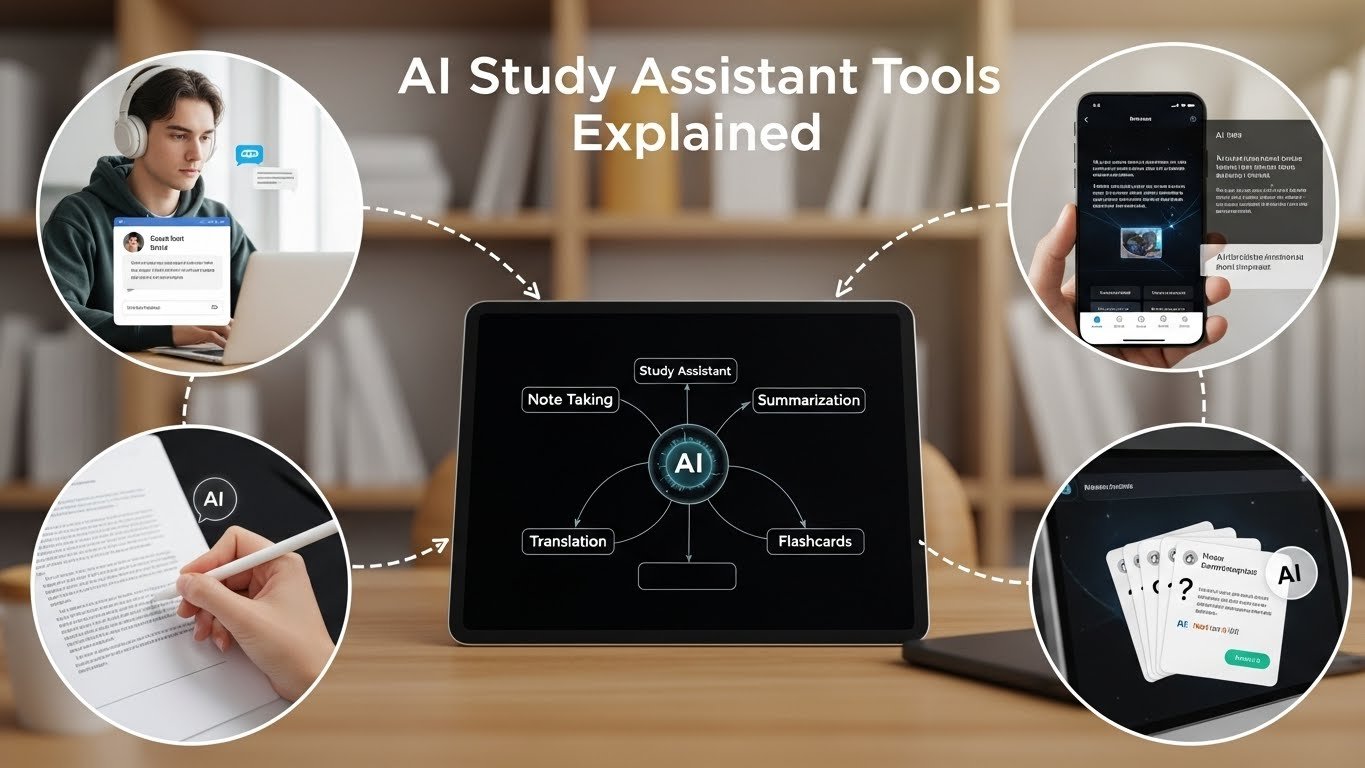
An AI study assistant is a digital tool powered by artificial intelligence that helps students learn through summarization, quiz generation, flashcards, and personalized explanations.
Can AI study assistants replace teachers or tutors?
No. They supplement learning but can’t replicate human guidance, emotional support, or deep discussion.
Are AI study tools safe for student data?
It depends on the platform. Always check privacy policies and avoid uploading sensitive or personally identifiable information.
Do AI study assistants work for all subjects?
They’re strongest in structured subjects like science, math, and history. Creative fields like literature or art may benefit less.
Can using an AI study assistant improve grades?
Indirectly, yes by improving comprehension, retention, and study efficiency. But results depend on how thoughtfully the tool is used.
Are there free AI study assistants available?
Yes, several free options exist (like Quizlet’s AI features or certain Chrome extensions), but premium versions often offer better accuracy and functionality.

Related Posts