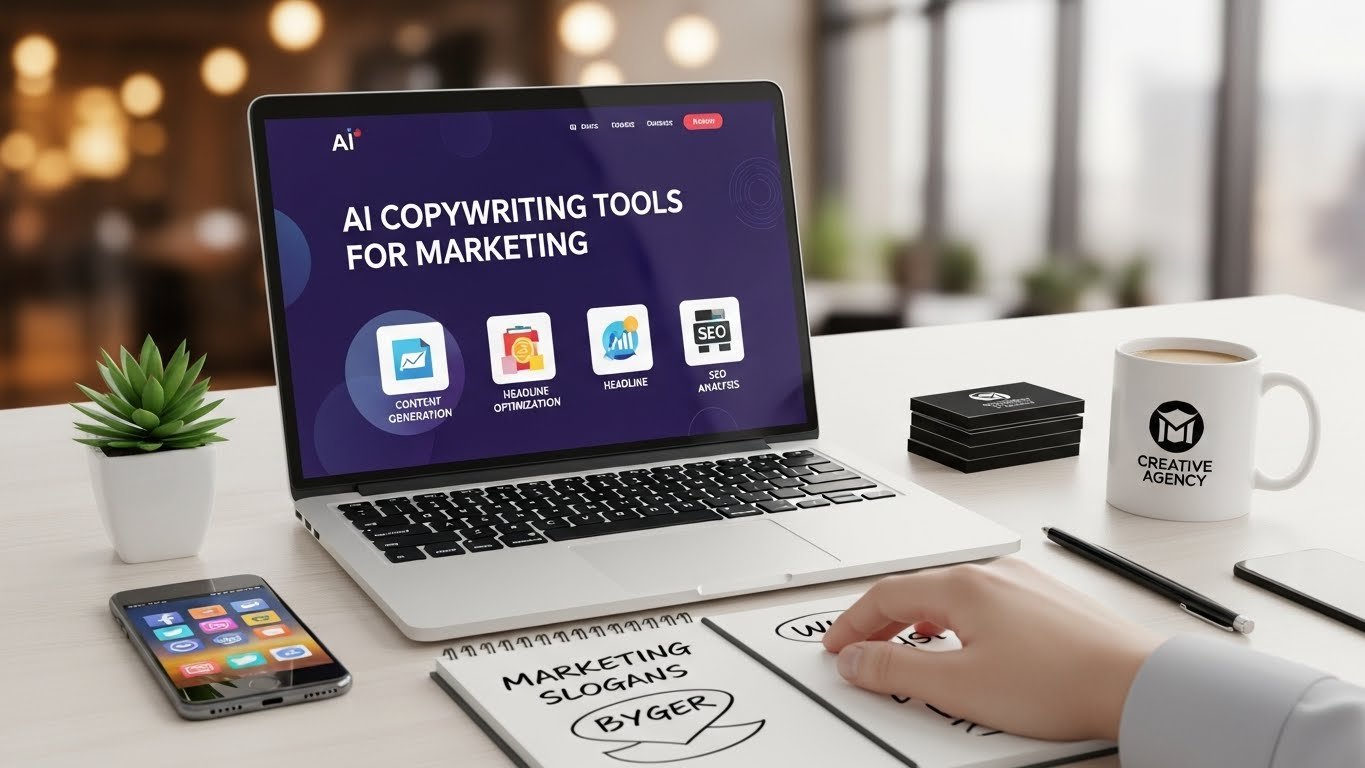
I’ll be honest, when AI copywriting tools first crossed my desk in early 2022, I was skeptical. The promise seemed too good: generate social media posts, ad copy, and email campaigns in seconds. But after spending the better part of two years incorporating these tools into my marketing workflow, I’ve developed some strong opinions about what works, what doesn’t, and where human creativity still wins every time.
The Real Value Proposition

Here’s what surprised me most: AI copywriting tools aren’t really about replacing writers. They’re about speed and iteration. Last month, I needed to create 15 variations of Facebook ad copy for a client’s product launch. What typically would’ve taken me three hours took about 45 minutes. I used Jasper to generate initial drafts, then refined them based on brand voice and campaign objectives.
The tools excel at certain tasks. Product descriptions for e-commerce? Absolutely. Meta descriptions for blog posts? Sure. First drafts of email subject lines? They’re decent at it. But here’s the catch: you need someone who understands marketing fundamentals to separate the wheat from the chaff.
Where They Fall Short
I ran an experiment with my team last quarter. We used Copy.ai to generate social media content for a B2B software company. The tool produced grammatically correct, coherent posts. They just felt… hollow. The copy lacked the specific industry insights that make B2B content resonate. We ended up using maybe 30% of what it generated, heavily editing the rest.
The problem isn’t the technology, it’s the input. These tools work with patterns and data, but they don’t understand nuance. They can’t grasp why a particular joke would land with your audience or why a certain phrase might trigger skepticism in your industry. That requires human judgment.
The Tools I Actually Use (And How)
Jasper has become my go-to for long-form content outlines. I use it to brainstorm angles for blog posts or structure email sequences. It’s particularly good at generating frameworks that I can flesh out with real examples and data.
Copy.ai works well for short-form content and headlines. When I’m stuck on how to phrase a call-to-action or need 20 variations of a tagline, it speeds up the brainstorming process considerably. Writesonic surprised me with its landing page templates. While I never use them verbatim, they help me think through the structure of what sections to include and how to organize benefits versus features.
The Workflow That Actually Works
I’ve developed a system that plays to both human and machine strengths. First, I outline the strategy, audience, goals, key messages, and brand voice. Then I use AI tools to generate multiple drafts or variations. This is where the speed advantage kicks in.
Next comes the critical part: editing with marketing expertise. I check for accuracy (AI tools occasionally hallucinate statistics or features), adjust for brand consistency, and inject personality. A local restaurant client has a quirky, irreverent brand voice. The AI consistently gave me safe, bland copy that would’ve diluted their identity.
Finally, I A/B test. This is crucial. Just because I edited something doesn’t mean it performs better than the AI’s original suggestion. I’ve been humbled more than once by AI-generated headlines outperforming my “improved” versions.
Cost vs. Value Reality Check
Most professional tools run $40-$80 monthly. For freelancers or small agencies, that’s reasonable if you’re using them daily. For a marketing team at a mid-sized company, it’s negligible. But I’ve seen small business owners waste money on these subscriptions because they generate content they never use or that doesn’t align with their brand. The value isn’t in the volume of content generated, it’s in how it enhances your existing process.
What’s Coming (And What Worries Me)

The technology keeps improving. The latest versions produce more nuanced copy and better understand context. But I’m watching two trends with concern. First, as more marketers use these tools, we risk homogenization. If everyone’s using the same AI to generate Facebook ads, don’t all the ads start sounding similar? Second, there’s a temptation to over-reliance on speed and volume. I’ve seen marketing teams flood channels with AI-generated content that’s technically fine but strategically empty. More isn’t always better.
.
The Bottom Line
AI copywriting tools have earned their place in my marketing toolkit. They’re time-savers for certain tasks and surprisingly good brainstorming partners. But they’re tools, not solutions. The marketers who succeed with them understand fundamental positioning, audience psychology, brand strategy, and use AI to execute faster, not to avoid the hard thinking. After two years, I’m more efficient. My content output has increased. But my most successful campaigns still rely on human insight first, AI assistance second.
FAQs
Are AI copywriting tools worth the cost?
For professionals producing content regularly, yes. For occasional users or very small businesses, free alternatives or manual writing may be more cost-effective.
Will AI copywriting tools replace human writers?
Not anytime soon. They’re better viewed as assistants that handle drafts and variations, while humans provide strategy, editing, and brand voice.
Which AI copywriting tool is best?
It depends on your needs. Jasper excels at long-form, Copy.ai at short-form, and Writesonic at structured templates. Most offer free trials; test them with your actual use cases.
Can Google detect AI-generated content?
Google’s focus is on content quality and usefulness, not whether AI helped create it. Well-edited, valuable content performs fine regardless of its origin.
How much editing does AI copy typically need?
In my experience, 40-70% requires moderate to significant editing to align with brand voice, ensure accuracy, and add depth.

Related Posts