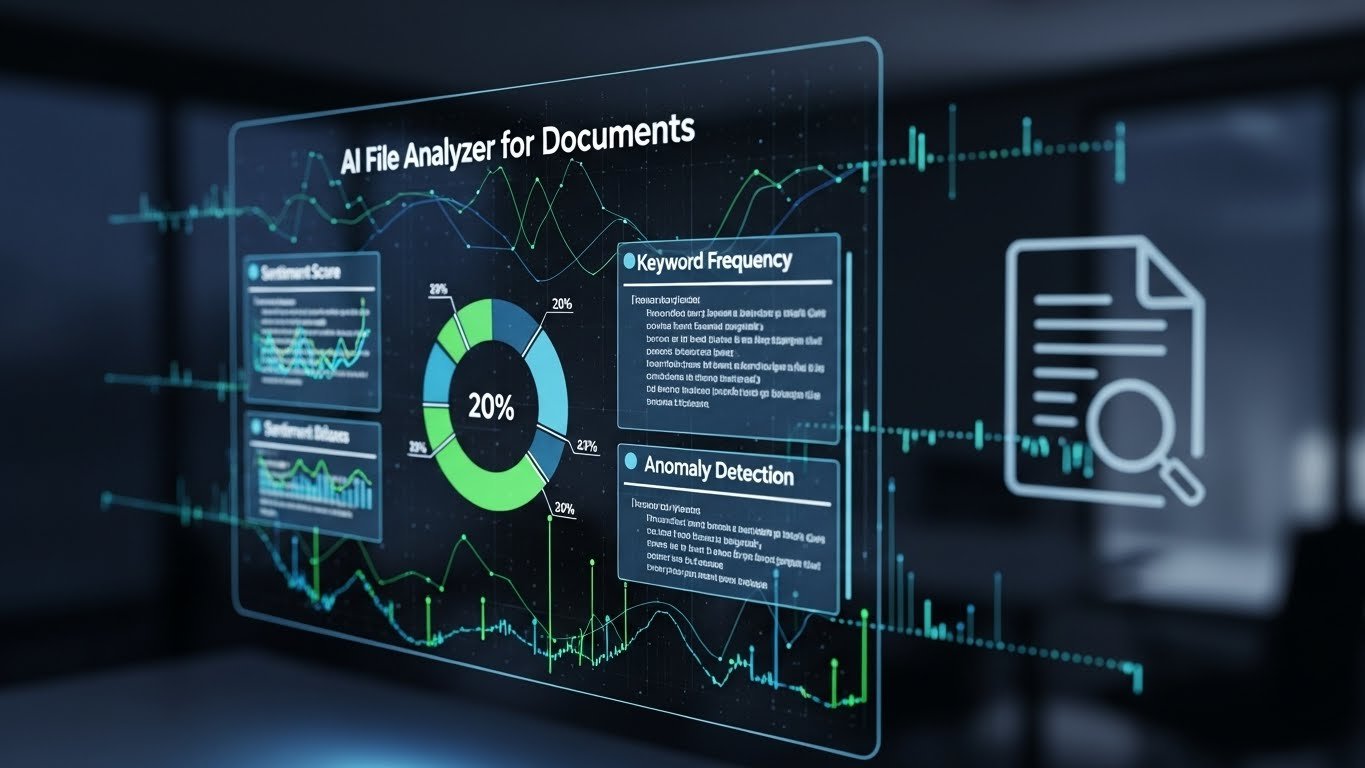
I’ve spent over a decade knee-deep in document-heavy industries, first as a legal researcher sifting through mountains of contracts, then consulting for businesses drowning in reports and invoices. Back then, it was all highlighters, coffee stains, and endless hours. Today, AI file analyzers for documents have changed the game entirely.
These tools use machine learning and natural language processing to scan, extract, and interpret data from PDFs, scans, Word files, you name it. In 2026, with remote work and data overload at peak levels, they’re not just nice-to-haves; they’re essential for anyone serious about efficiency.
Let me break it down. At their core, AI document analyzers start with optical character recognition (OCR) to convert images or scans into editable text. But they don’t stop there. Advanced models like those powered by transformers (think BERT or newer multimodal LLMs) understand context, entities, and even sentiment.
Upload a 200-page financial report, and in seconds, it pulls key figures, flags anomalies, or generates summaries. I remember testing this hands-on with a client’s messy archive of vendor contracts. What took my team days to spot renewal dates and compliance risks, the AI handled in under an hour, with 95% accuracy.
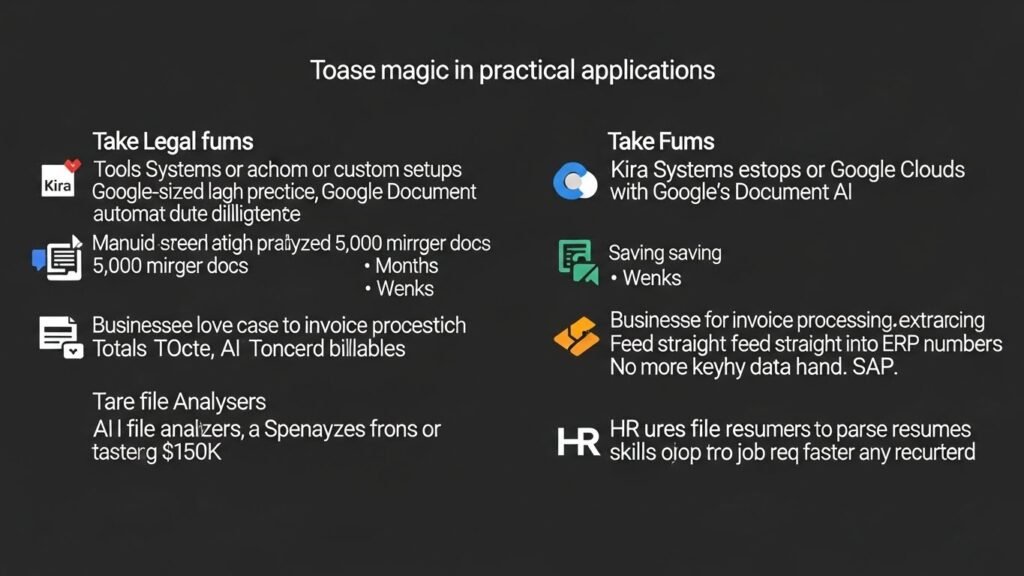
The real magic shines in practical applications. Take legal firms: Tools like those from Kira Systems or custom setups with Google Cloud’s Document AI automate due diligence. In one case I advised on, a mid-sized law practice analyzed 5,000 merger docs. Manual review? Months.
AI? Weeks, saving $150K in billables. Businesses love them for invoice processing, extracting line items, totals, and PO numbers to feed straight into ERP systems like SAP. No more keying data by hand. HR teams use AI file analyzers to parse resumes, matching skills to job reqs faster than any recruiter could.
From my experience implementing these in startups, the ROI is staggering. A fintech client cut AP processing time by 70%, reducing errors that once cost them thousands in overpayments. Compare that to traditional methods: Humans miss 1-5% of data in complex docs; AI hits 98%+ on structured files. But it’s not all rainbows. Handwritten notes or faded scans trip them up—OCR accuracy drops below 80% there. Poorly formatted tables? Still a headache, though 2024 updates like Anthropic’s Claude or OpenAI’s GPT-4o Vision are closing the gap with better layout understanding.
Choosing the right AI document analyzer boils down to your needs. For enterprises, enterprise-grade options like ABBYY FineReader or Rossum offer robust APIs, compliance (GDPR, HIPAA), and scalability. Solopreneurs might lean toward user-friendly ones like Nanonets or Parseur, which integrate seamlessly with Zapier. I always stress starting small: Pilot on a sample set, benchmark against manual checks, and train models on your data for custom accuracy. Cost? Freemium tiers exist, but expect $0.01-$0.10 per page for heavy use.
Ethically, we can’t ignore the pitfalls. Data privacy is paramount upload sensitive docs to cloud services? Use on-prem solutions or federated learning to keep info in-house. Bias in training data can skew results; for instance, models trained mostly on English contracts falter on multilingual filings. I’ve seen firms overlook this, leading to overlooked risks in international deals. Always audit outputs, especially for high-stakes decisions. And jobs? AI augments, doesn’t replace analysts now focus on strategy, not drudgery.
Looking ahead, the fusion of AI file analyzers with generative AI is explosive. Imagine querying “What’s the riskiest clause here?” on a lease PDF, getting a reasoned response with citations. Tools like Harvey.ai are pioneering this for law, while generalists like ChatGPT plugins handle everyday docs. By 2026, expect hyper-personalized analyzers via fine-tuning on proprietary datasets.
In my view, balanced against hype, these tools democratize data insights but demand human oversight. They’ve saved me countless hours, turning chaos into clarity. If you’re buried in docs, dip a toe in start with a free trial. The productivity boost is addictive.
FAQs
What is an AI file analyzer for documents?
A tool that uses AI, OCR, and NLP to extract, summarize, and analyze text/data from files like PDFs and scans automatically.
How accurate are AI document analyzers?
Typically 90-99% on clean, structured docs; lower (70-85%) for handwriting or poor scans. Custom training improves this.
Are there free AI file analyzers?
Yes, options like Smallpdf AI or Google Drive’s built-in tools offer basic features; premium for advanced analysis.
What are the best AI document analyzers in 2026?
Top picks: Google Document AI for enterprises, Nanonets for automation, ABBYY for precision depends on use case.
Is it safe to use AI for sensitive documents?
Choose HIPAA/GDPR-compliant providers with on-prem options; always review privacy policies and avoid public uploads.

Related Posts