
A few years ago, I sat in a cramped conference room with my team, staring at a whiteboard covered in sticky notes. We were trying to map out a quarterly marketing campaign,
but the process felt like herding cats ideas flew in every direction, deadlines kept shifting, and half the team was still stuck in endless email chains. Then, someone suggested we try an AI-powered project management tool.
At first, we were skeptical. Would it just add another layer of complexity? Would it replace the human touch in our collaboration? But after a few weeks, something unexpected happened:
we actually finished the campaign on time. Not only that, but the tool helped us spot bottlenecks before they became crises, automate repetitive tasks, and even generate first drafts of content. It wasn’t magic—it was just smarter workflows.
Since then, I’ve tested dozens of AI productivity tools with teams across industries, from remote startups to Fortune 500 companies. Some were game-changers. Others were overhyped. But one thing is clear: AI isn’t just a buzzword anymore. It’s quietly reshaping how teams work, communicate, and get things done.
Here’s what I’ve learned about the best AI productivity tools for teams—and how to use them without losing the human element.
Why AI Productivity Tools Are a Game-Changer for Teams

Let’s be honest: most teams waste way too much time on low-value work. A 2026 McKinsey report found that employees spend nearly 20% of their workweek on tasks that could be automated, things like scheduling meetings, summarizing notes, or chasing down approvals.
AI productivity tools don’t just save time,e they reclaim focus. They handle the repetitive, mundane tasks so teams can spend more energy on strategy, creativity, and problem-solving. But not all tools are created equal. The best ones do three things well:
- Automate the boring stuff (scheduling, data entry, follow-ups).
- Augment human work (drafting emails, analyzing data, brainstorming ideas).
- Improve collaboration (real-time feedback, smart summaries, task prioritization).
The key? AI should assist, not replace. The best teams use these tools to work smarter, not just faster.
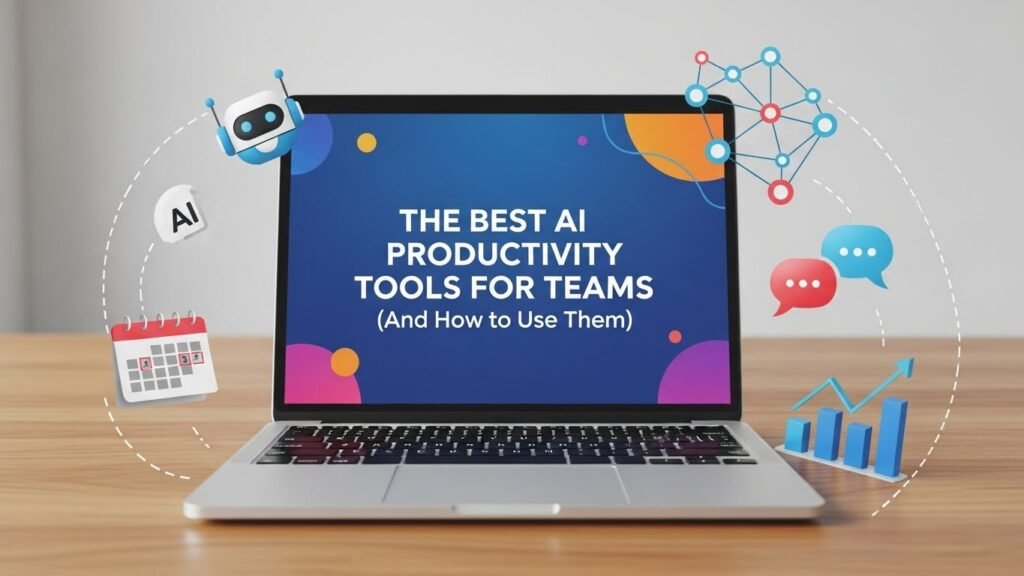
The Best AI Productivity Tools for Teams (And How to Use Them)
1. AI-Powered Project Management: ClickUp & Asana
Best for: Teams drowning in tasks, missed deadlines, and chaotic workflows.
I’ve seen teams go from “We’ll never hit this deadline” to “How did we finish early?” just by switching to an AI-enhanced project management tool.
How it works:
- Smart task prioritization: AI analyzes deadlines, dependencies, and team workloads to suggest what to tackle next.
- Automated updates: Instead of manually updating statuses, AI pulls data from Slack, emails, and other tools to keep projects on track.
- Predictive insights: Some tools (like ClickUp) flag potential bottlenecks before they derail a project.
Real-world example:
A client of mine, a mid-sized e-commerce company, was struggling with late product launches. After implementing ClickUp’s AI features, their on-time delivery rate jumped from 65% to 92% in three months. The AI didn’t do the work for them, but it showed them where to focus.
Watch out for:
- Over-automation. If every task is auto-assigned, team members can feel like cogs in a machine.
- Data overload. Some tools generate too many insights; focus on the ones that actually move the needle.
2. AI Meeting Assistants: Otter.ai & Fireflies
Best for: Teams tired of endless meetings with no actionable takeaways.
Raise your hand if you’ve ever zoned out in a meeting, only to realize later you missed a key decision. (I see you.) AI meeting assistants solve this by recording, transcribing, and summarizing discussions in real time.
How it works:
- Live transcription: No more frantic note-taking. AI captures everything said, even in noisy environments.
- Smart summaries: Instead of a 10-page transcript, you get a bullet-point recap of decisions, action items, and follow-ups.
- Searchable archives: Need to recall what was said about the Q3 budget? Just search keywords.
Real-world example:
A remote software team I worked with used Fireflies to cut their post-meeting follow-up time by 40%. Instead of spending 30 minutes writing recaps, they got a ready-to-share summary in minutes. The best part? The AI even flagged when someone said, “We’ll circle back on this”—a classic red flag for vague commitments.
Watch out for:
- Privacy concerns. Some tools record everything, which can be risky in sensitive discussions.
- Over-reliance on summaries. A 3-sentence AI recap can’t capture nuance—always review key points.
3. AI Writing & Content Tools: Notion AI & Jasper
Best for: Teams that create a lot of content marketing, sales, and internal docs but struggle with writer’s block or consistency.
I’ll admit it: I was a skeptic. Could AI really help with creative work? Then I tried Notion AI for drafting a client proposal. I gave it a few bullet points, and in under a minute, it generated a polished first draft. Was it perfect? No. But it saved me two hours of staring at a blank page.
How it works:
- First drafts in seconds: Feed the AI a prompt (e.g., “Write a LinkedIn post about remote work trends”), and it generates a starting point.
- Tone matching: Need a formal email? A casual Slack message? AI adapts to your brand voice.
- Editing & refinement: Tools like Jasper can rewrite awkward phrasing or expand on ideas.
Real-world example:
A content team at a SaaS company used Jasper to double their blog output without hiring more writers. They still edited every piece, but the AI handled the heavy lifting of research and first drafts.
Watch out for:
- Generic outputs. AI-generated content often lacks originality—always add a human touch.
- Over-editing. If you spend more time tweaking AI drafts than writing from scratch, it’s not saving time.
4. AI-Powered Communication: Slack AI & Microsoft Copilot
Best for: Teams overwhelmed by messages, emails, and endless threads.
If your team’s Slack looks like a digital firehose, AI can help filter the noise. Tools like Slack AI and Microsoft Copilot act as smart assistants, summarizing long threads, flagging urgent messages, and even drafting replies.
How it works:
- Thread summaries: Instead of scrolling through 50 messages, AI gives you a TL;DR of the key points.
- Smart replies: Stuck on how to respond? AI suggests context-aware replies (e.g., “Sounds good—let’s schedule a follow-up”).
- Priority alerts: AI flags messages that need immediate attention, so nothing slips through the cracks.
Real-world example:
A distributed design team I consulted for was losing 10+ hours a week just managing Slack. After enabling Slack AI, they cut response times by 30% and reduced missed messages by half.
Watch out for:
- Over-automation. If AI replies too much, conversations can feel robotic.
- Misinterpretations. AI isn’t great at sarcasm or tone—always double-check before hitting send.
How to Choose the Right AI Productivity Tools for Your Team

Not every tool is a fit for every team. Here’s how to pick the right ones:
1. Start with the biggest pain point.
- Struggling with deadlines? Try an AI project management tool.
- Drowning in meetings? Test a meeting assistant.
- Content bottlenecks? Experiment with AI writing tools.
2. Look for integrations.
The best AI tools play well with others. If your team lives in Slack, Google Workspace, or Microsoft 365, choose tools that integrate seamlessly.
3. Test before committing.
Most AI tools offer free trials. Run a pilot with a small team before rolling it out company-wide.
4. Train your team (but don’t overcomplicate).
AI tools are only as good as the people using them. Hold a short training session to show how the tool works, but avoid overwhelming people with features they’ll never use.
5. Measure the impact.
Track time saved, error reduction, and team satisfaction. If a tool isn’t moving the needle after a few months, it’s not worth keeping.
The Future of AI in Team Productivity
AI productivity tools are still evolving. In the next few years, we’ll likely see:
- More predictive insights: Tools that don’t just track work but anticipate problems before they happen.
- Deeper personalization: AI that adapts to your work style, not just generic best practices.
- Better collaboration with AI: Instead of just automating tasks, AI will actively participate in brainstorming, problem-solving, and decision-making.
But here’s the catch: AI is a tool, not a replacement. The best teams use it to enhance human work, not eliminate it. The goal isn’t to work faster—it’s to work smarter.
FAQs About AI Productivity Tools for Teams
1. Are AI productivity tools secure?
Most reputable tools (like ClickUp, Notion, and Otter.ai) use enterprise-grade encryption and comply with GDPR/CCPA. However, always check their data privacy policies before uploading sensitive information.
2. Will AI replace jobs in my team?
No, but it will change them. AI handles repetitive tasks, freeing up humans for higher-value work. The teams that thrive will be the ones that adapt and upskill.
3. How much do these tools cost?
Prices vary:
- Free tiers: Many tools (like Notion AI, Otter.ai) offer limited free plans.
- Paid plans: Typically $10–$30/user/month for full features.
- Enterprise: Custom pricing for large teams (often $50+/user/month).
4. Can AI really improve team collaboration?
Yes, but only if used intentionally. AI can reduce friction (e.g., fewer meetings, faster responses), but it can’t replace trust, creativity, and human connection.
5. What’s the biggest mistake teams make with AI tools?
Over-automating. If every task, email, and decision goes through AI, teams lose agency and creativity. Use AI to assist, not dictate.
Final Thoughts: AI as a Team Member, Not a Replacement
When I first started using AI productivity tools, I worried they’d make work feel less human. But the opposite happened. By handling the busywork, AI gave my team more time to think, create, and connect.
The best AI tools don’t just save time, they change how we work. They help us focus on what matters, reduce stress, and even spark new ideas. But they’re not a silver bullet. The teams that succeed with AI are the ones that use it thoughtfully, balancing automation with human judgment.
So, if your team is drowning in tasks, meetings, or content bottlenecks, give AI a try. Start small. Measure the impact. And don’t forget: the goal isn’t to work harder, it’s to work smarter. Now, if you’ll excuse me, I have to go tell my team about a new AI tool I just tested. (Spoiler: It’s a game-changer.)

Related Posts