My initial experience with AI software was as distasteful as something out of science fiction, something that could only be available to tech magnates or in the far-off future. Jump to the present, and AI is not only a reality, but it is now embedded in daily life. Whether I unlock my phone in the morning or turn off the light in the evening, AI is operating in the background and most of the time covering my eyes; it is doing its job of making my daily habits smoother, faster, and in some cases even more enjoyable.
But what is the actual appearance of the AI software? What are millions of people using it for? And what, as well as the viability, is the advantage and the Bastards-of depending on these smart tools? We are going to venture into the world of AI software to be used in everyday life, based on our experience in the field and the significant progress as of 2026.
The Silent Revolution: AI Software in Everyday Applications.

It is not only artificial intelligence accessible to the practitioners of statistics or large businesses. It has the most significant influence in the way it has been insidiously integrated into the apps and devices we already have. Now, we can deconstruct what you are probably already seeing AI in use every day.
- Intelligent Assistants/ Voice Control.
The most obvious applications of AI to day-to-day life are probably Siri, Google Assistant, and Alexa. They are acquainted with natural language, know what you like over time, and can manipulate smart home devices, remind, or even make a joke. I have my Google Assistant to help me set timers when I am cooking something or to find out the weather during my morning exercise. It is not flawless, yet there are still misunderstandings that occur, particularly in noisy settings, but it is quickly improving in understanding the context and questions to follow.
- Personalized Recommendations
Have you ever questioned yourself about how Netflix always knows what you are willing to watch, or how Amazon knows what you are going to make a purchase next? It is AI at work, understanding you and your behavior, and dying to compare it to millions of other users, and then spitting out suggestions that are almost psychic. Personally, I have been exposed to new favorite artists that I would not have otherwise discovered through the Spotify Discover Weekly playlist. Such systems are trained on each click, skip, or replay.
- Messaging and Email Automation.
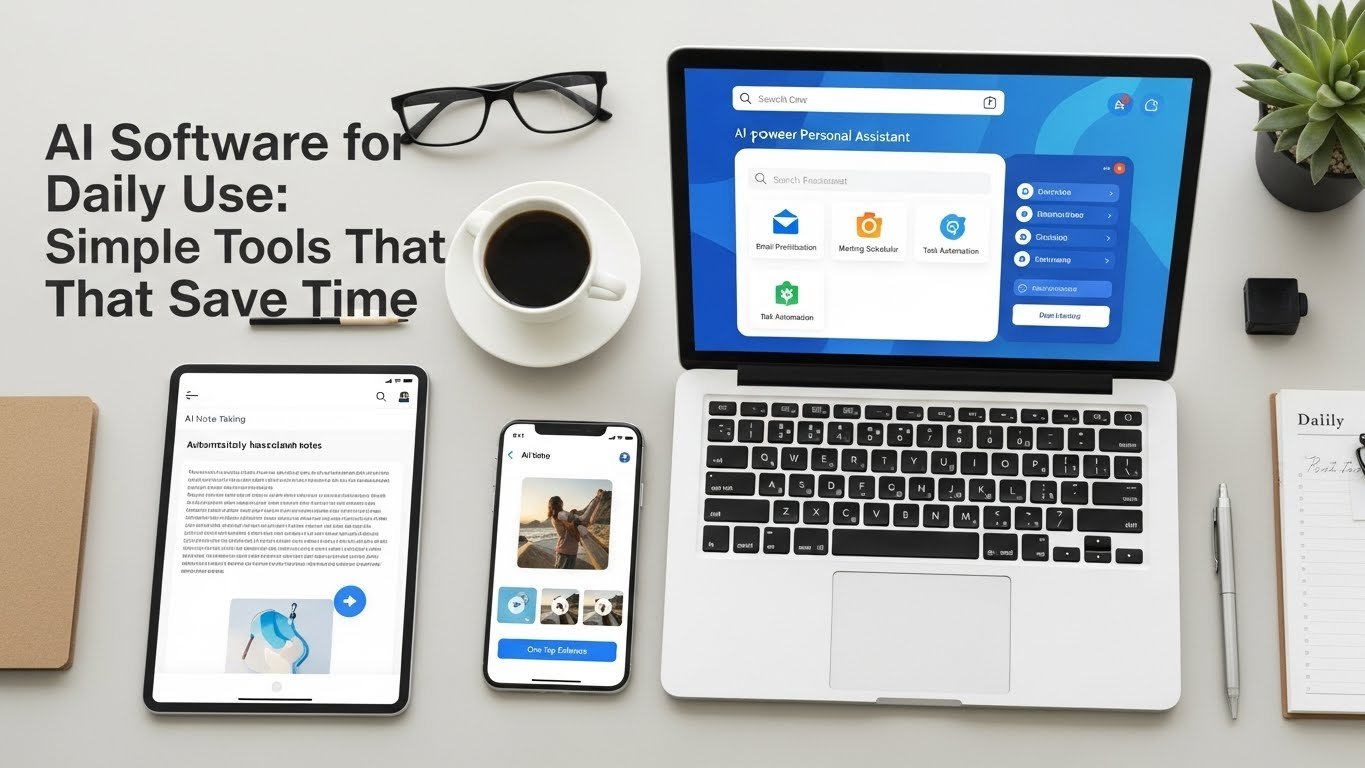
Smart replies and default filtering of spam are AI-powered Gmail and Outlook features that save hours of email management per week, which otherwise would have been tedious. On hectic days, I use the built-in suggested replies option, which is not flawless, although it frequently hits upon the correct tone in order to respond swiftly. In the meantime, I have such tools as Grammarly, which is an AI grammar and style checker, that makes my writing sharper without being intrusive.
- Enhancement of photos and videos.
AI in apps such as Google Photos, Apple Photos, and even social media filters helps in organizing, improving, and even creating new images out of the ones that are already available. I have seen how unclear vacation pictures could be made crystal clear with just a simple press of a button, and how red eyes could be eliminated with the press of a button. The more current trend is the deployment of AI-enabled generative picture-generators to produce entirely new pictures given a textual description, becoming able to transfer an enticement such as a cat riding a skateboard at sunset into literal reality.
- Financial Planning and Budgeting.
Your bank has features like Mint, YNAB (You Need A Budget), and apps like these use AI to read your spending habits, identify suspicious occurrences, and more commonly recommend how to save money. I have witnessed my friends using these tools to identify repeated payments that they were not aware of, or to arrange automatic savings according to their paydays. The more you communicate, the more intelligent the suggestions.
Concrete Advantages and Impact in the real life.

Being the user and the observer of these tools, the advantages are obvious:
- Time Savings: AI automates these repetitive tasks, including email sorting and domestic budgeting. This liberates the mind to engage in more productive or constructive action.
- Personalization: Be it news feed, shopping list, or music playlist, AI customizes content to your preferences and ideas, thus making the digital experience more personal.
- The Supportive Access: Users with disabilities have new voice assistants and smart transcription applications that reduce access barriers, which makes technology more inclusive.
- Minimization of errors: AI serves as a second line of defense by detecting typing mistakes, suspicious bank transfers, etc. However, everything is not smooth sailing.
Logistical Shortcomings and Ethics.
Although AI applications that are used in everyday life are amazing, they are not devoid of their frailties and dangers.
- Privacy Issue: A lot of AI operations are based on gathering and processing individual information. This casts justifiable doubts on the manner in which such information is stored, consumed, and distributed. I have been forced to actively revisit the permissions and privacy settings of apps, and I suggest that other people to do the same.
- Bias and Fairness: AI systems can be no more than the data that they are trained on. This may result in prejudiced or unfair decisions, particularly in such fields as hiring, lending, or even content suggestions. As a user, one should always be critical and be mindful of these limitations.
- Dependence and Skill Erosion: Overreliance on AI as a spelling aid, navigation or even decision makers may slowly erode our personal skills. I also ensure that my navigational skills are on my toes, in case of a loss in phone battery.
- Security Threats: With the increased integration of AI into smart home gadgets and personal assistants, they will be vulnerable to hackers. No bargain can be made over strong passwords, two-factor authentication, and frequent updates of the software.
The type of AI tools to use: the selection criteria.
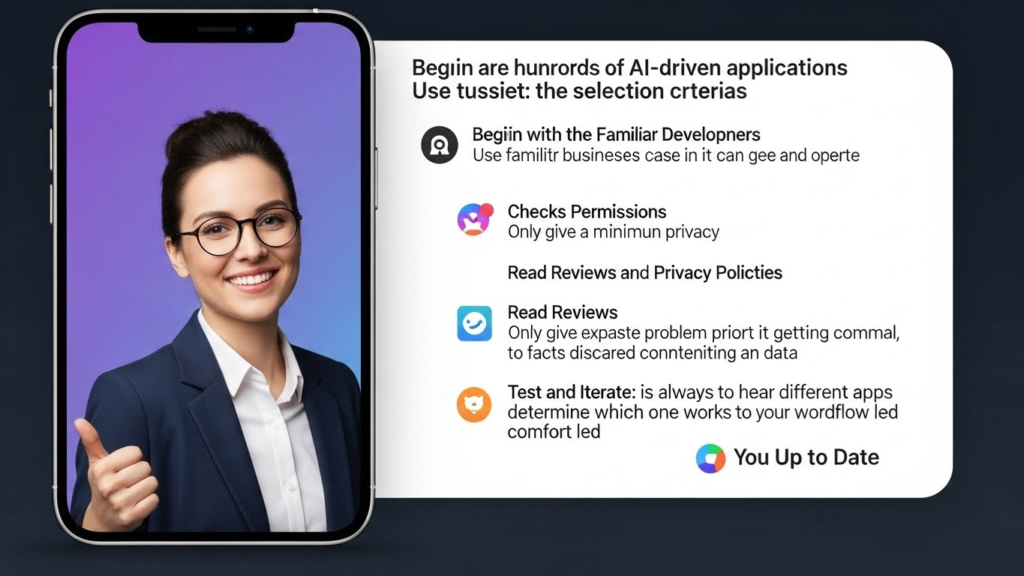
There are hundreds of AI-driven applications available in the market, which ones to trust and use? These are some of the practical tips that I can suggest:
- Begin with the familiar Developers: Use familiar businesses in case of security and privacy.
- Checks Permissions: Only give the minimum access that can get an app to operate.
- Read Reviews and Privacy Policies: User reviews: Can expose a problem prior to it becoming common, and privacy policies ought to disclose facts concerning the use of data.
- Test and Iterate: There is no need to worry; it is always good to hear different apps and determine which one works for your workflow and comfort level.
- Are You Up to Date? AI is changing by leaps and bounds. New features and security updates continue to be made every now and then.
Future: What is the Future of AI in Everyday Life?
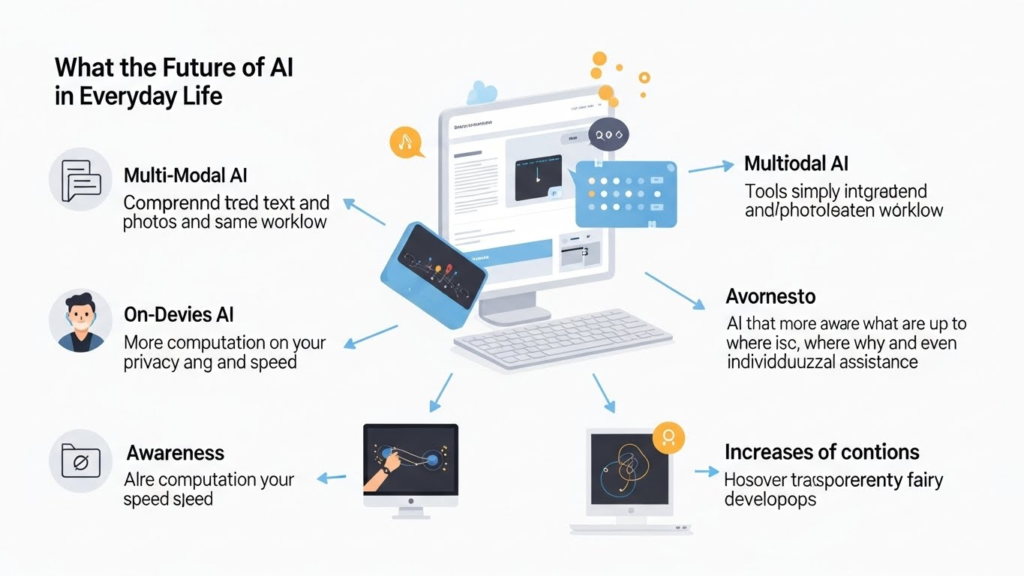
In the future, AI software is simply going to be more integrated and intuitive. We’re already seeing:
- Multi-modal AI: The tools are able to comprehend and create text, photos, and even video within the same workflow.
- On-Device AI: More computation is occurring on your smartphone or computer, increasing the privacy and speed.
- Awareness of the context: AI that is more aware of what you are up to, where you are, and why, and can even provide you with more individualized assistance.
However, along with increased functions, the responsibility will be to the users and developers to achieve transparency, fairness, and security.
Summary: Becoming a Smart Adaptor to AI.
Daily use AI software is not a mere technological trend, but it is a fundamental change in the way we interact with our devices, the way we run our lives, and even the way we make decisions. When applied wisely, it may prove to be an effective accomplice, and life becomes easier, more effective, and even entertaining. However, it demands discovery, reason, and dedication toward privacy and morals.
The trick is in maintaining a balance as we get deeper into this augmented AI world: leave the routine, the repetitive, the dull to AI, but remain in the car and keep your judgment, imagination, and humanity as your primary drivers.
FAQs
Q: How do you like the best AI application to use on a daily basis?
A: One can have no one-size-fits-all answer–it is dependent on your needs. To be productive, you can use Todoist or Notion, which have AI capabilities. Google Assistant or Alexa are trendy with smart home control. Mint or YNAB would be good options in personal finance.
Q: Are AI assistants such as Siri and Alexa safe to use?
A: Yes, as a rule, but it is necessary to periodically verify privacy settings, use difficult passwords, and pay attention to what personal information you say to voice assistants.
Q: Will software automation be able to live up to its human judgment?
A: Not so, and more likely not yet, not vital decisions. The automation of common tasks and suggestions is best performed by AI, but human control is still required.
I: What to do to make AI recommendations more accurate?
A: Use the app on a regular basis, leave feedback (where appropriate), and update your preferences. The more information and input you provide, the more the AI learns about your habits.
Q: Do you have appropriate free AI to cope with in everyday life?
A: Yes, there are numerous applications that provide strong free versions that are upgraded with paid subscriptions. Some of them are Google Assistant, Grammarly, and AI-powered design tools created by Canva.

Related Posts