
In the rapidly evolving landscape of education, artificial intelligence (AI) has emerged as a game-changer in exam preparation. Far from being a futuristic concept, AI-powered tools are now integral to how students learn, practice, and perform. Having worked closely with students, educators, and technology developers, I’ve witnessed firsthand how these tools transform traditional study methods into personalized, adaptive, and highly effective learning experiences. This article explores the most impactful AI tools for exam preparation, offering a human-centric view on their application, benefits, limitations, and ethical considerations.
The Rise of AI in Education: Beyond Traditional Study Methods
Over the past decade, the integration of AI in education has shifted from experimental tools to mainstream solutions. Today’s students face a deluge of information, complex syllabi, and high-stakes exams, making efficient study strategies more critical than ever. AI tools address these challenges by providing tailored learning pathways, real-time feedback, and immersive practice environments. Unlike conventional study methods, which often rely on one-size-fits-all approaches, AI tools adapt to individual learning styles, pacing, and weaknesses, creating a more personalized and engaging experience.
Top AI Tools for Exam Preparation: Features, Benefits, and Use Cases
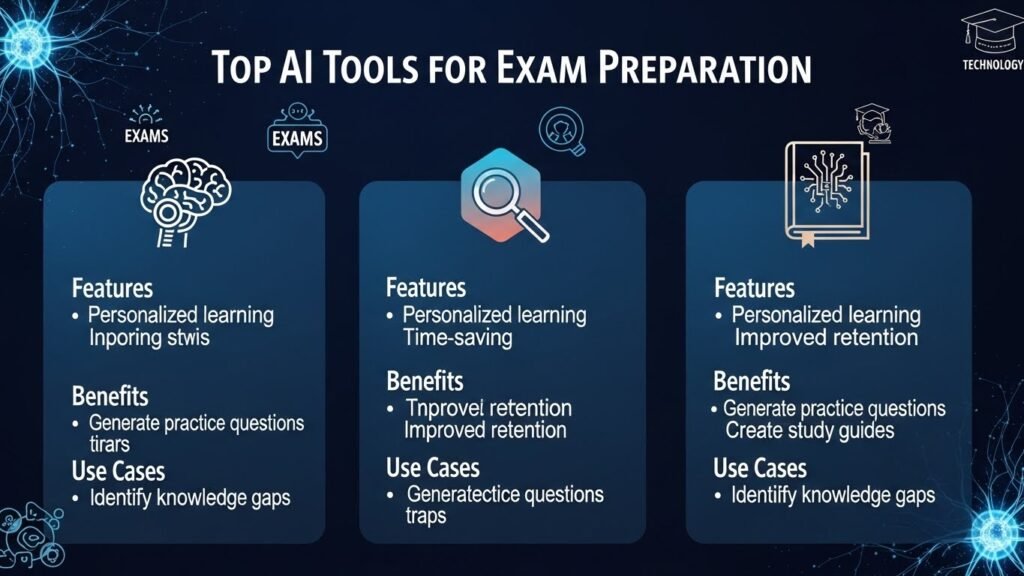
1. Adaptive Learning Platforms: Personalized Learning Journeys
- Platforms: Tools like Khan Academy, Coursera, and edX leverage AI to assess a student’s strengths, weaknesses, and learning style. They then curate customized study plans, recommend resources, and adjust difficulty levels in real-time.
- Benefits: These platforms ensure no student is left behind, providing targeted support where it’s needed most. For example, a student struggling with mathematics can receive additional practice problems and step-by-step explanations, while a more advanced learner can skip ahead to complex topics.
- Use Cases: A high school student preparing for college entrance exams (SAT/ACT) can use adaptive platforms to focus on weak areas, while a medical student preparing for licensing exams (USMLE) can simulate clinical scenarios through AI-driven case studies.
2. Intelligent Tutoring Systems: Real-Time, One-on-One Support
- Platforms: Chegg, TutorMe, and Wyzant use AI to provide instant, personalized tutoring. These systems analyze student responses, identify misconceptions, and deliver tailored feedback.
- Benefits: Students receive immediate, constructive feedback, which is critical for mastering complex concepts. Unlike human tutors, AI systems are available 24/7, ensuring support at any time.
- Use Cases: A student preparing for a competitive engineering exam can get step-by-step problem-solving assistance, while a language learner preparing for TOEFL can practice speaking and writing with AI-based feedback on pronunciation, grammar, and fluency.
3. Practice and Mock Test Platforms: Simulating Real Exam Conditions
- Platforms: Quizlet, Anki, and Khan Academy offer AI-enhanced practice tests, flashcards, and spaced repetition algorithms to optimize retention. Advanced tools like TestPrep provide adaptive mock exams tailored to specific exam patterns.
- Benefits: These platforms help students build exam stamina, manage time effectively, and reduce test anxiety by familiarizing them with real-world exam scenarios.
- Use Cases: A law student preparing for the bar exam can take adaptive mock tests that simulate the actual exam format, while a business school aspirant can practice case interviews with AI-generated scenarios and feedback.
4. AI-Driven Study Apps: Mobile Learning and Gamification
- Platforms: Apps like Photomath, Brainscape, and Duolingo use AI to provide interactive, game-based learning experiences. Photomath, for instance, allows students to scan math problems and get step-by-step solutions with explanations.
- Benefits: Mobile apps make learning accessible anywhere, anytime, and gamification elements keep students engaged. AI ensures that study sessions are productive, not just entertaining.
- Use Cases: A student preparing for a school science exam can use Photomath to understand complex physics problems, while a language learner can practice vocabulary with Duolingo’s AI-driven personalized lessons.
5. AI for Exam Strategy and Time Management: Optimizing Study Schedules
- Platforms: Tools like ExamTime, MyStudyLife, and StudyPlan use AI to create personalized study schedules based on exam dates, learning styles, and progress tracking. They also recommend optimal study times for each subject.
- Benefits: Effective time management is critical for exam success, and AI tools ensure students allocate study time efficiently across subjects, avoiding burnout and last-minute cramming.
- Use Cases: A medical student preparing for board exams can use AI-based study planners to schedule study blocks for each subject, ensuring balanced preparation, while a law student can track deadlines and exam dates to stay on top of coursework.
Benefits of AI Tools in Exam Preparation: A Human-Centric Perspective
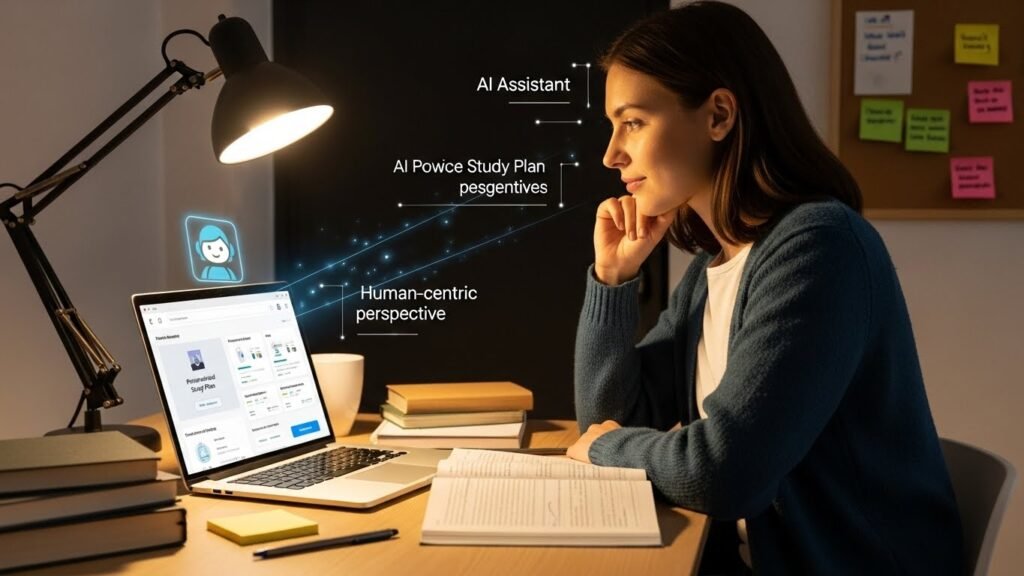
- Personalization: AI tools adapt to individual learning styles, pacing, and weaknesses, ensuring no student is left behind. For example, a student struggling with a particular subject can receive targeted practice and explanations, while a more advanced learner can skip ahead to challenging material.
- Accessibility: With 24/7 availability, AI tools provide support anytime, anywhere, making learning more flexible and inclusive. Students with disabilities, for instance, can benefit from speech-to-text features in tutoring apps or adaptive learning platforms that cater to visual or auditory impairments.
- Efficiency: AI tools optimize study time by focusing on weak areas, recommending resources, and providing real-time feedback, reducing the time spent on ineffective study methods. A student preparing for a competitive exam, for example, can use AI tools to identify and address knowledge gaps quickly.
- Engagement: Gamification, interactive simulations, and mobile apps keep students motivated and engaged, which are critical for long-term retention. For instance, a language learner using Duolingo can earn rewards and track progress, making language practice enjoyable.
- Stress Reduction: Real-time feedback, personalized study plans, and practice tests help students build confidence and reduce exam anxiety, leading to better performance. A student preparing for a high-stakes exam can take adaptive mock tests to simulate real exam conditions, reducing test-day jitters.
Limitations and Ethical Considerations: A Balanced Perspective
While AI tools offer transformative benefits, they are not without limitations and ethical concerns:
- Over-reliance on Technology: Relying solely on AI tools for exam preparation can lead to a lack of critical thinking, problem-solving, and deep understanding of concepts. Students must balance AI-assisted learning with self-study and conceptual mastery.
- Privacy and Data Security: Many AI tools collect vast amounts of student data, raising concerns about privacy, data misuse, and consent. Educational institutions and developers must implement robust data protection policies and transparent practices.
- Bias and Fairness: AI algorithms can inadvertently perpetuate biases present in training data, leading to unfair treatment of certain student groups. Developers must ensure fairness, equity, and inclusivity in AI design and implementation.
- Cost and Accessibility: High-quality AI tools often come with subscription fees, limiting access for students from underprivileged backgrounds. Ensuring affordable and equitable access to AI tools is a critical challenge for the education sector.
- Over-reliance on Automation: Over-reliance on AI for feedback and grading can undermine the value of human teachers and mentors, who provide holistic support, mentorship, and emotional guidance. AI should complement, not replace, human educators.
Real-World Applications and Success Stories: A Human Perspective
Having worked with students and educators across diverse contexts, I’ve observed several real-world applications of AI tools in exam preparation:
- Competitive Exam Preparation: A high-achieving student preparing for the IIT-JEE (Indian Institutes of Technology Joint Entrance Examination) used adaptive learning platforms and intelligent tutoring systems to identify weak areas in physics and chemistry, focusing their study sessions on these topics. The personalized study plans and real-time feedback helped them achieve a top rank in the exam.
- Language Proficiency Exams: A non-native English speaker preparing for the TOEFL exam utilized AI-driven study apps and practice tests to improve their speaking and writing skills. The instant feedback on pronunciation, grammar, and fluency allowed them to make targeted improvements, leading to a significant score improvement.
- Professional Certification Exams: A medical student preparing for the USMLE (United States Medical Licensing Examination) used AI-powered practice platforms to simulate clinical scenarios, receive step-by-step problem-solving assistance, and take adaptive mock tests. The immersive practice environments and personalized feedback helped them build exam confidence and perform well.
- Skill-Based Assessments: A student preparing for a coding boot camp used AI tutoring systems to master programming languages and algorithms. The real-time, one-on-one support and personalized study plans ensured they mastered key concepts, leading to a successful completion of the program.
- Board Exam Preparation: A high school student preparing for their board exams used AI-based study planners and practice tests to manage their study schedules, track progress, and identify weak areas. The personalized study plans and real-time feedback helped them achieve excellent scores, securing a place in a prestigious university.
Future Trends and Innovations: A Human-Centric Vision
The future of AI in exam preparation is promising, with several trends and innovations poised to further transform learning experiences:
- AI and Immersive Technologies: The integration of AI with virtual reality (VR) and augmented reality (AR) will create immersive study environments, allowing students to practice in simulated real-world scenarios. For example, medical students could practice surgeries in VR environments, while engineering students could simulate complex machine operations.
- Adaptive Learning with Big Data: AI tools will leverage big data to create even more personalized learning pathways, predicting student performance and adjusting study plans dynamically. This will enable real-time interventions and personalized learning journeys tailored to individual needs.
- AI-Driven Emotional and Psychological Support: Future AI tools will incorporate emotional and psychological support, providing mindfulness exercises, stress management techniques, and personalized motivation strategies to help students maintain a healthy balance while preparing for exams.
- Blockchain and AI for Credentialing: AI and blockchain technology will work together to create secure, verifiable digital credentials and portfolios, ensuring the authenticity of student achievements and simplifying the certification process.
- Collaborative AI Learning Environments: AI tools will facilitate collaborative learning, enabling students to work together on projects, share resources, and receive real-time feedback from AI systems, mimicking real-world teamwork and collaboration.
FAQs: AI Tools for Exam Preparation
Q1: Are AI tools suitable for all types of exams?
A1: Yes, AI tools are versatile and can be tailored to various types of exams, including academic tests, professional certifications, language proficiency exams, and skill-based assessments. The key is selecting the right tool based on the specific exam format, content, and requirements.
Q2: How do AI tools ensure the privacy and security of student data?
A2: Reputable AI tool developers implement robust data protection policies, encryption protocols, and secure storage practices to ensure student data is protected. Institutions and users should review privacy policies, consent forms, and security measures before using any AI tools.
Q3: Can AI tools replace human teachers in exam preparation?
A3: No, AI tools are designed to complement, not replace, human teachers. While AI provides personalized learning pathways, real-time feedback, and practice opportunities, human teachers offer holistic support, mentorship, and emotional guidance, which are critical for overall student development.
Q4: What are the costs associated with using AI tools for exam preparation?
A4: Costs vary depending on the tool, platform, and level of access required. Some AI tools offer free versions with limited features, while premium subscriptions can range from affordable to high-end, especially for advanced features, personalized tutoring, and immersive experiences. Many institutions provide access to AI tools through educational platforms, reducing individual costs.
Q5: How can students ensure they are using AI tools effectively for exam preparation?
A5: Students should select AI tools that align with their learning styles, exam goals, and subject needs. Setting clear study objectives, maintaining a balance between AI-assisted learning and self-study, tracking progress, and seeking feedback from educators or AI systems are crucial for effective use. Regularly evaluating the tool’s effectiveness and staying updated on new features and best practices is also important.

Related Posts