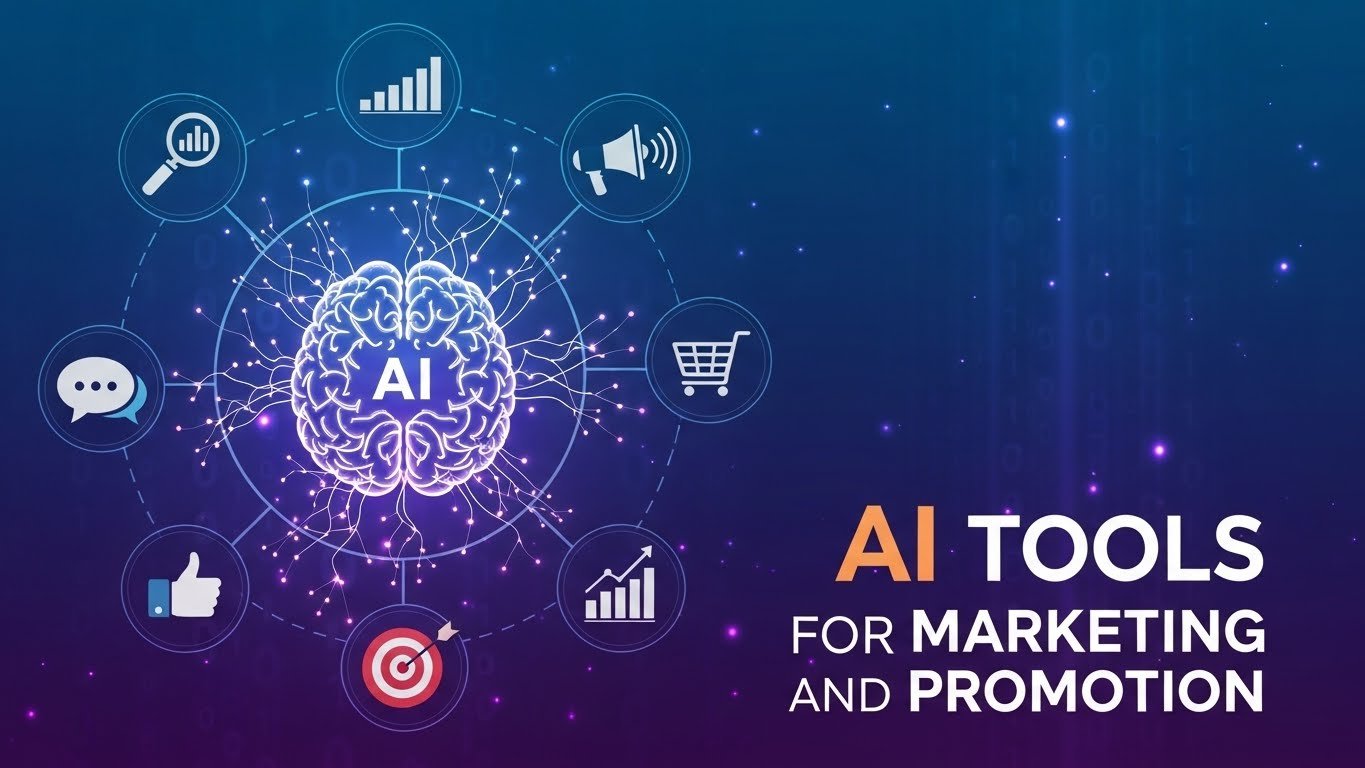
I’ll be honest, when I first started exploring AI-powered marketing tools about three years ago, I was skeptical. The landscape felt overwhelming, and I wasn’t sure whether these platforms would actually save time or just create more work.
But after integrating several into my workflow and seeing the results firsthand, I can’t imagine going back to purely manual processes.
The marketing world has fundamentally shifted. What used to take my team days now happens in hours, and we’re reaching audiences we never could have targeted effectively before. Let me walk you through what’s actually working in the real world of AI-driven marketing.
The Content Creation Revolution

Content remains king, but the tools we use to create it have evolved dramatically. I’ve been using various AI writing assistants to help draft everything from blog outlines to social media captions. These aren’t replacing human creativity, they’re augmenting it.
For instance, when I needed to create 50 product descriptions for an e-commerce client last month, I used an AI tool to generate first drafts based on product specifications.
Did I use them as-is? Absolutely not. But having that foundation meant I could focus on refining the voice, adding personality, and ensuring brand consistency rather than staring at blank pages. What would have taken two weeks took four days.
The key lesson here: AI tools work best as collaborators, not replacements. I always edit, fact-check, and inject human insight into anything generated by these platforms.
One area where I’ve seen tremendous impact is in visual content creation. Tools like Canva’s AI features, Midjourney, and DALL-E have democratized design in ways I didn’t anticipate.
A small business client of mine with zero design budget was able to create professional-looking social media graphics, ad variations, and even conceptual mockups.
However, there’s a learning curve. You need to understand prompting—how to describe what you want clearly enough for the tool to deliver useful results. I spent probably 20 hours just experimenting with different approaches before I could consistently get quality outputs.
The trademark and copyright considerations are also real; you can’t just use AI-generated images without understanding usage rights and potential legal gray areas.
Email Marketing Gets Smarter
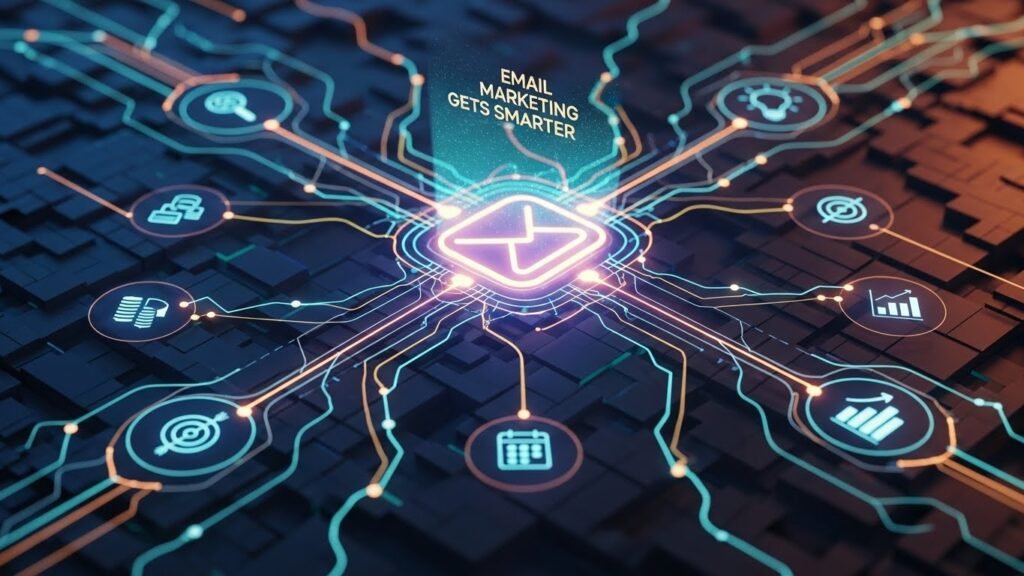
Email marketing tools have integrated AI in genuinely useful ways. Subject line optimization, send time prediction, and content personalization have improved my open rates by about 18% on average across client campaigns.
What impressed me most was a recent campaign where the AI analyzed past engagement patterns and automatically segmented our list into micro-audiences. Each group received slightly different messaging based on their behavior history. The click-through rates were noticeably higher than our standard segmentation approach.
But here’s something the platforms don’t advertise enough: you need clean data for AI to work properly. Garbage in, garbage out. I spent a month cleaning up one client’s subscriber list before the AI features could function effectively.
Customer Service and Chatbots
Chatbots have come a long way from those frustrating early versions that just looped you through canned responses. Modern AI-powered chat tools can handle surprisingly nuanced customer inquiries. I implemented one for a B2B service company, and it now handles about 60% of initial inquiries without human intervention.
That said, we monitor it closely. There are still moments where the bot misinterprets context or provides information that’s technically correct but practically unhelpful.
We’ve set it up so anything beyond basic FAQs gets escalated to a human team member. The goal isn’t to eliminate human touch, it’s to free up humans for conversations that actually need that personal attention.
Social Media Management
AI-powered social media tools have changed how I approach content calendars and posting strategies. Platforms like Hootsuite and Buffer now use AI to suggest optimal posting times, recommend content, and even predict which posts might perform well.
I’ve found the analytics particularly valuable. Instead of manually comparing metrics across posts, the AI identifies patterns I might have missed like noticing that behind-the-scenes content performs 40% better on Thursdays for one particular client.
The Reality Check
Let me be clear about limitations. AI marketing tools aren’t magic. They don’t understand your brand’s soul, they can’t replicate your unique expertise, and they sometimes produce content that feels generic or off-brand. I’ve seen companies rely too heavily on automation and lose the authentic voice that made them special in the first place.
There’s also the cost consideration. While some tools offer free tiers, the really powerful features usually require paid subscriptions. For small businesses or solo marketers, you need to be strategic about which tools justify the investment.
Moving Forward
The AI tools I use most consistently are those that handle repetitive, time-consuming tasks data analysis, A/B testing, initial content drafts, and scheduling. This frees me up for strategy, relationship building, and creative problem-solving that genuinely requires human judgment.
If you’re just starting with AI marketing tools, pick one area where you feel the most time pressure. Start there, learn the tool thoroughly, then expand. Don’t try to overhaul your entire marketing stack at once.
FAQs
Are AI marketing tools expensive?
Many offer free tiers or trials, but professional features typically cost $20-$200+ monthly depending on the tool and your needs.
Can AI completely automate my marketing?
No. AI handles specific tasks well, but strategy, brand voice, and relationship building still require human oversight and creativity.
Do I need technical skills to use these tools?
Most modern AI marketing tools are designed for non-technical users, though there’s a learning curve with any new platform.
Will AI replace marketing jobs?
It’s changing job requirements rather than eliminating roles. Marketers who effectively combine AI capabilities with human insight are becoming more valuable.
How do I choose the right AI tool?
Start by identifying your biggest time drain or performance gap, then research tools specifically designed for that problem. Trial periods are your friend.

Related Posts