
As someone who’s been in the classroom (and the library carrel) for years, first as a student grinding through undergrad, then as a tutor and teaching assistant,t I’ve seen firsthand how the right tools can turn academic struggles into successes. Today, artificial intelligence isn’t just for tech giants or research labs; it’s quietly revolutionizing how students learn, write, research, and stay organized. And the best part? Many of the most powerful AI tools are completely free. No credit card required, no hidden fees, just real help when you need it most.
The catch? Not every “free” tool is created equal. Some bombard you with ads, throttle features after a few uses, or feel more gimmicky than useful. Over the past few years, I’ve tested dozens of options with students across high school, college, and even grad school. Below is a curated list of the truly free AI tools for students that deliver tangible results without compromising your privacy or breaking your focus.
1. Writing & Editing: Polish Your Papers Without the Stress

Every student knows the panic of staring at a draft that feels “close” but isn’t quite there. These tools act like a personal editor in your back pocket.
Grammarly (Free Version)
Grammarly isn’t new, but its AI-powered grammar and clarity checks are remarkably improved. The free version catches awkward phrasing, subject-verb agreement errors, and tone issues (like accidentally sounding too casual for a research paper). I’ve watched students raise their essay grades from B- to A- simply by fixing the flagged issues. It integrates seamlessly with Chrome, Google Docs, and Microsoft Word.
Real-life example: Sarah, a sophomore, used Grammarly while drafting her history thesis. It highlighted her repetitive use of “was” in passive voice (“The treaty was signed” → “Roosevelt negotiated the treaty”). Her professor commented, “Clearer prose this semester, great improvement.”
Hemingway Editor
While not AI in the deep-learning sense, Hemingway uses algorithmic analysis to grade readability. It highlights complex sentences (in red for “hard to read”), passive voice, and adverbs. Paste your text, and it gives you a “readability score.” Aim for a Grade 8–10 level for most academic work; trust me, your readers (and your grader’s tired eyes) will thank you.
Google Docs Smart Features
Google’s suite is packed with subtle AI helpers. “Smart Compose” predicts your next words as you type (like email replies), while “Spelling and Grammar” checks go beyond basic spellcheck. The “Explore” tool uses AI to find relevant research papers or images as you write no leaving your document.
2. Research That Doesn’t Suck: Find Credible Info Fast
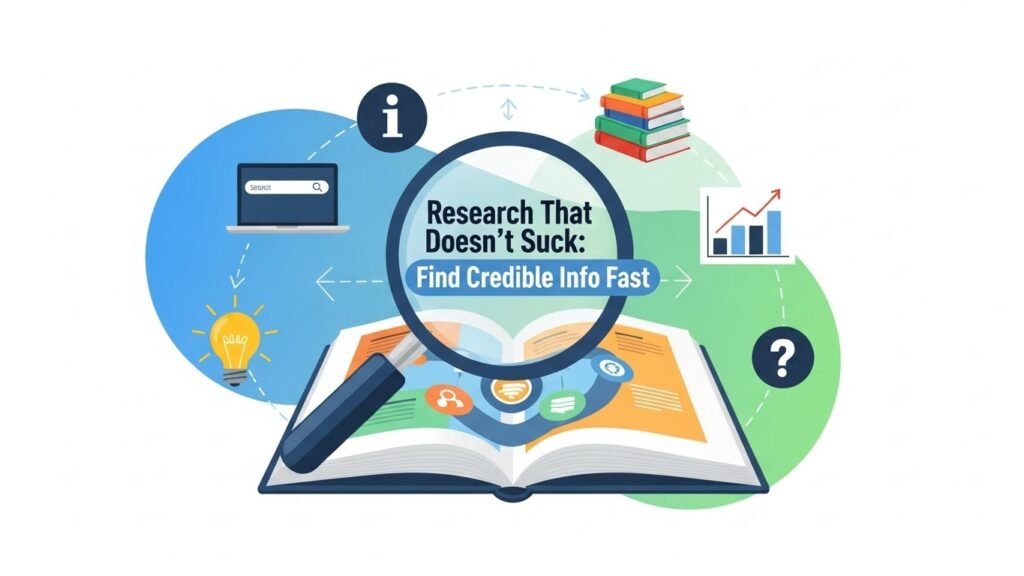
Sifting through endless Google results or paywalled journals is a time sink. These tools cut through the noise.
Consensus
Consensus uses AI to scan millions of peer-reviewed papers and give you a summary of what the evidence says on any topic. Type “impact of social media on teen mental health,” and it spits out a balanced overview: “70% of studies found correlation with increased anxiety; 30% showed no significant effect.” It even cites the papers. The free tier lets you run 5 queries a day, enough for most assignments.
Why it’s a game-changer: Instead of reading 10 abstracts to get a basic understanding, you get an instant, evidence-based snapshot. Perfect for literature reviews or debate prep.
Semantic Scholar
Backed by the Allen Institute, this search engine prioritizes academic papers and uses AI to explain them in plain language. Hover over a citation, and a sidebar shows a concise summary. It also recommends highly influential papers you might have missed. No paywalls, open access only.
3. Learning & Understanding: When Concepts Just Click

Struggling with calculus or Spanish verbs? These tools adapt to your learning pace.
Photomath
Stuck on a math problem? Snap a photo. Photomath’s AI recognizes the equation, whether handwritten or printed, and provides a step-by-step solution. It doesn’t just give the answer; it explains why each step works, using real math notation. The free version covers algebra, calculus, and even some stats.
Student story: Mark, a high school junior, used Photomath to tackle AP Calculus. “It helped me see where I went wrong in integration problems. My test scores jumped from 70% to 85% in one semester.”
Khan Academy
Khan’s entire platform is free, and its newer AI features personalize your learning path. After a quiz, it identifies knowledge gaps (“You’re weak on quadratic inequalities”) and serves up targeted practice. Teachers also use it to assign tailored homework.
4. Productivity & Organization: Stay on Top of Deadlines

Lectures, group projects, and that 3 a.m. paper crisis stay organized without burning out.
Otter.ai
Otter transcribes audio in real time. Upload a lecture recording (or use its app to record live), and it generates searchable notes, highlights key points, and even identifies speakers. The free plan offers 300 minutes per month, enough for a week’s worth of classes. I’ve used this to catch details I missed while multitasking during a stats lecture.
Todoist
Todoist’s natural language input is AI-powered magic. Type “Write intro due Friday” and it auto-sets the date. It prioritizes tasks using “Smart Schedule” and integrates with Google Calendar. The free version supports up to 5 projects, ideal for juggling classes, a part-time job, and club activities.
GitHub Copilot (Free for Students)
If you’re coding, Copilot is a lifesaver. It suggests entire lines or functions as you type, based on context. Approved students get it free through the GitHub Student Developer Pack. It’s not about copying code, it’s about learning syntax and best practices faster.
The Fine Print: Using These Tools Responsibly
AI tools are powerful, but they’re not magic. Here’s what I emphasize to every student:
- Verify Critical Info: Consensus and Semantic Scholar are great starting points, but always cross-check important claims with the original source.
- Avoid Over-Reliance: Use Grammarly to enhance your writing, not replace your thinking. Your voice matters.
- Ethics First: Never submit AI-generated text as your own. Tools like Photomath are for learning, not cheating.
- Mind the Limits: Free tiers have caps. Plan ahead don’t run out of Otter minutes before finals.
FAQs
Q: Are these tools really free, or will I get charged later?
A: Yes, all listed tools have permanent free tiers (e.g., Grammarly’s core features, Otter’s 300 mins/month). Some (like GitHub Copilot) require student verification but cost $0.
Q: Can I use these on my phone?
A: Absolutely. Most have iOS/Android apps (Duolingo, Photomath, Otter).
Q: Will using these hurt my critical thinking skills?
A: Only if you use them passively. Treat them as assistants, not substitutes. For example, read Photomath’s explanation aloud to yourself to internalize the concept.
Q: Is my data safe with these free tools?
A: Reputable ones (like Khan Academy and Duolingo) have strong privacy policies. Avoid tools that demand unnecessary personal info.
Q: What if I need more features?
A: Many offer affordable student discounts (e.g., Grammarly Premium is ~$5/month for students). Prioritize free tools first.

Related Posts